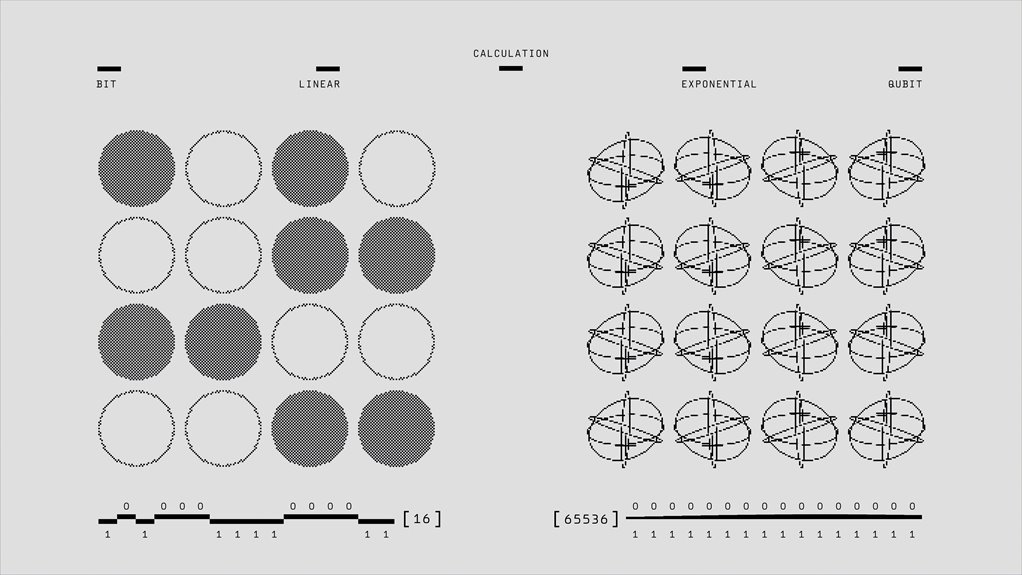
The EchoTitan grid coordinates real-time data across four nodes: 4509726595, 5128902059, 8448859160, and 8642327338 within an 18.84×18.84 framework. It emphasizes modular interfaces, secure access, and traceable governance. Asset mapping enables precise monitoring and resource management. Self-optimization adapts to dynamic conditions to balance cost, reliability, and emissions while maintaining autonomy and rapid recovery. The mechanism invites scrutiny of how these elements integrate under pressure as outcomes unfold under evolving demands.
What Is the Echotitan Grid and Its Core Identifiers?
The Echotitan Grid is a distributed infrastructure that coordinates real-time data collection, processing, and decision support across interconnected nodes. It defines core identifiers and their roles within a governance model, enabling traceability and interoperability. The framework emphasizes modularity, standardization, and secure access. Keywords addressed: excluded topic ideas, unrelated discussions. This structure supports freedom by clarifying boundaries and obligations for participants.
How Does the 18.84×18.84 Framework Drive Real-Time Resilience?
How does the 18.84×18.84 framework concretely enhance real-time resilience within the Echotitan Grid? It enables continuous situational awareness, modular reconfiguration, and rapid recovery via modularity, edge processing, and fault-isolated workflows. The approach emphasizes real time resilience and dynamic optimization, balancing supply-demand, grid topology, and reserve deployment while preserving operational autonomy for flexibility and robust performance under perturbations.
Mapping 4509726595, 5128902059, 8448859160, 8642327338 to Grid Assets
Mapping 4509726595, 5128902059, 8448859160, 8642327338 to Grid Assets involves establishing exact correspondences between the four identifiers and their respective physical or logical components within the Echotitan Grid.
The process defines an asset taxonomy, enabling real time monitoring, traceability, and modular classification.
It informs resilience metrics and supports transparent, freedom-oriented governance of grid resources.
Self-Optimization in Dynamic Conditions: Algorithms and Outcomes
Self-optimization in dynamic conditions leverages adaptive algorithms to maintain grid performance amid fluctuating demand, weather, and fault scenarios. Algorithms optimize generation, storage, and topology in real time, evaluating trade-offs between cost, reliability, and emission targets.
Outcomes demonstrate improved Dynamic resilience, reduced congestion, and faster recovery. The approach emphasizes modularity, transparency, and scalable governance for autonomous decision cycles and operator trust.
Frequently Asked Questions
What Are the Real-World Deployment Costs?
Deployment costs vary by scope and scale, with upfront CAPEX, ongoing OPEX, and integration needs; data protection considerations influence total expenditure through encryption, governance, and compliance measures, shaping risk-adjusted budgeting for secure, scalable deployment.
How Is User Data Protected Across Nodes?
Data is protected across nodes through data encryption and access control, ensuring only authorized entities can read or modify information; distributed keys, zero-trust authentication, and regular audits reinforce layered security while preserving user autonomy and privacy.
Which Vendors Support 18.84×18.84 Interoperability?
Vendor interoperability is limited; only select providers meet Grid protocol compatibility and Offline simulation fidelity standards. Nodes exhibit robust security architecture, with Recovery time benchmarks guiding evaluation; attention focuses on Vendor interoperability and overall system resilience.
Can Offline Scenarios Be Simulated Accurately?
Offline simulations can approximate outcomes, but precision hinges on model fidelity and data integrity; when properly calibrated, they yield useful insights while preserving system freedom, though unexpected edge cases may still challenge validation and extrapolation.
What Are the Failure Modes and Recovery Times?
Failure modes include cascading outages, software faults, and hardware degradation; recovery times depend on redundancy and containment, ranging from minutes to hours. The analysis emphasizes structured remediation, controlled reinitialization, and verification before returning to nominal operation.
Conclusion
The Echotitan Grid integrates four core nodes within the 18.84×18.84 framework, delivering real-time monitoring, governance, and adaptive optimization. Through modular interfaces and asset mapping, it sustains resilience, balances cost, reliability, and emissions, and enables rapid fault isolation. Self-optimization algorithms adjust topology and storage in response to dynamic conditions, ensuring autonomy with secure traceability. An anachronistic visual—a ticking Victorian steam gauge amid quantum-ready sensors—illustrates the fusion of historical reliability and futuristic insight guiding decision-making.
