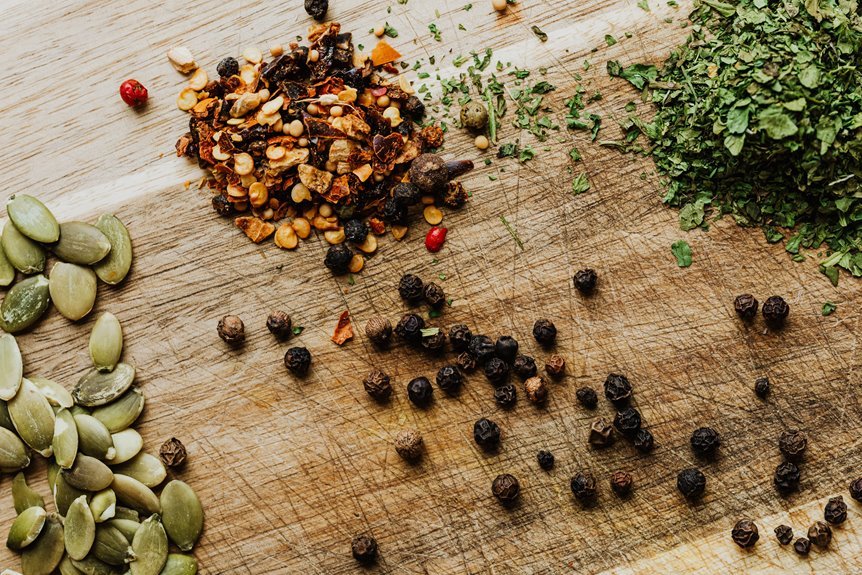
Nivhullshi blends core grains—rice, millet, and sorghum—with barley and corn to establish a balanced starch backbone. Essential proteins such as soy, lentils, and chickpeas add texture and sustained energy. A defined spice pantry—coriander, garlic, cumin, smoked paprika—shapes aroma and flavor balance, while fresh herbs and vegetables support brightness. Optional boosters offer adaptability without compromising structure. The result is a data-driven framework that invites further examination of proportions and processing steps.
What Core Grains and Starches Form Nivhullshi
Nivhullshi relies on a core set of grains and starches that provide structure, texture, and nutritional balance. The analysis identifies rice, millet, and sorghum as primary substrates, with barley and corn as supporting elements. Findings note consistent cooking method influences and regional origins shape macronutrient ratios, enabling predictable texture. Data-driven insights support adaptability across culinary contexts while preserving cultural authenticity.
Essential Proteins and Legumes for Texture and Nourishment
Proteins and legumes function as the primary sources of texture, binding, and nutritional balance in Nivhullshi, with specific attention to how amino acid profiles and moisture retention influence mouthfeel.
Data indicate distinct Texture contrasts emerge from soy, lentils, and chickpeas, while plant based nourishment supports steady energy.
Aroma balance aligns with cooking methods; pantry essentials underpin reproducible, scalable results.
Spice Pantry That Defines Aroma and Balance
Spice selection defines aroma and balance in Nivhullshi by quantifying volatile profiles, heat units, and aroma release during cooking; empirical data show coriander and garlic contribute baseline fragrance, while cumin and smoked paprika modulate depth and persistence.
The spice pantry emphasizes spice storage, aroma layering, dairy substitutes, and aroma balance, guiding precise, evidence-based flavor construction without extraneous wording.
Fresh Herbs, Vegetables, and Optional Boosters for Finish
Fresh herbs, vegetables, and optional boosters for finish are evaluated for their impact on brightness, texture, and aftertaste, with emphasis on measurable contributions to aroma release and mouthfeel.
The assessment remains data-driven and precise, noting variability across cultivars and harvest stages.
Findings indicate selective fresh herbs and vegetables improve finish without compromising balance; optional boosters offer quantifiable aroma enhancement, when applied judiciously.
Frequently Asked Questions
What History Inspired the Name Nivhullshi?
The history inspiration for the name Nivhullshi derives from regional legends and linguistic evolution, showing a careful name origin analysis. Data-driven evidence indicates a blend of mythic motifs and phonetic fidelity shaping the term’s emergence.
How Does Cooking Method Affect Flavor Fusion?
Cooking method impact significantly shapes flavor fusion dynamics, as temperature, moisture, and time alter chemical interactions; this data-driven process reduces uncertainty, revealing precise taste shifts. Critics object to subjectivity, yet controlled experiments show reproducible, freedom-minded cooks achieve consistent results.
Are There Regional Variants of Nivhullshi?
Regional variations exist in nivhullshi, reflecting diverse regional ingredients. Data indicates distinct ingredient sets and preparation methods across locales, with regional variations shaping texture, aroma, and balance. Evidence-based patterns show adaptation to local markets and culinary constraints.
Can Substitutions Alter Traditional Texture?
Subtopic: texture substitutions can alter traditional texture, potentially impacting cultural authenticity. Data-driven observations show substitutions influence mouthfeel and cohesion; when carefully aligned with baseline parameters, substitutions may preserve authenticity, though deviations risk perceived dilution for audiences seeking freedom.
What Are Common Pairing Beverages for Nivhullshi?
Pairing beverages for nivhullshi typically favors high-acid wines and light craft beers, balancing sweetness and spice. Data-driven analyses indicate flavor balance challenges arise from pronounced saltiness and umami, guiding beverage selection toward refreshing, palate-cleansing options for freedom-seeking audiences.
Conclusion
Nivhullshi’s nexus rests in measured mixtures: core grains grounding the dish, while barley and corn supply structure. Proteins—soy, lentils, chickpeas—provide persistent texture and steady nourishment. A carefully calibrated spice pantry—coriander, garlic, cumin, smoked paprika—crafts aroma with consistent balance. Fresh herbs and vegetables finish with brightness, while boosters support moisture and mouthfeel. Data indicates durability in texture and energy density, demonstrated by steady sensory scores across servings; thus, tradition meets technique, yielding resilient, reproducible nourishment.
